20260624T141520260624T1530America/PanamaScaling access to services: what works in SBCCInternational Social and Behavior Change Communication Summitinfo@sbccsummit.org
Digital Communications Campaign to Motivate Early Screening for Symptomatic TB in India
Oral Presentation02:15 PM - 03:30 PM (America/Panama) 2026/06/24 19:15:00 UTC - 2026/06/24 20:30:00 UTC
India's National TB Prevalence Survey (2022), suggests that of those not seeking care, 68% ignored the symptoms and 18% did not recognise them as TB symptoms. This presents an alarming risk of possible persons with TB going 'missing'. There was a need therefore, to further understand these barriers and arrive at a communication campaign rooted in an audience-centred approach, to drive early testing for TB. The Union, supported by Gates Foundation, launched a mobile-first media campaign to activate the at-risk audiences to take the first step to TB testing through a digital, symptom-based self-screening. Four different messaging approaches, ranging from emotional and family-oriented to factual, were deployed to arrive at the most effective route; leading to the audience clicking the 'call to action' button and visiting the self-screening site and/or taking the self-screening test. Media platforms were represented by Display, Demand and Video Inventory across Google Network, META and Programmatic. The campaign was implemented in a phased manner with learnings from each phase incorporated into the next phase to gain incremental understanding. The results significantly exceeded expectations – 2.1mn visits on the landing page, 6,00,000 clicks on the call button with <.25USD to activate one call. Disruption of trivialisation of cough was the most effective messaging; both for raising awareness and mobilising action. Video-based platforms like YouTube and Google Display are recommended for awareness, Google and click-based platforms, Demand Generation, Programmatic and META are recommended for mobilisation.
Apresentadores Anisha Singh International Union Against Tuberculosis And Lung DiseasePooja Sehgal Gates Foundation
Strengthening Systems to Amplify Collaborative Impact for Youth Employment: Lessons from the Large-Scale Rollout of the Community Service as a Pathway to Work Project (CSPW)
Oral Presentation02:15 PM - 03:30 PM (America/Panama) 2026/06/24 19:15:00 UTC - 2026/06/24 20:30:00 UTC
Youth unemployment remains a critical challenge in Ethiopia, disproportionately affecting young women with limited access to meaningful work. The Community Service as a Pathway to Work (CSPW) project was introduced to address systemic gaps in youth employment by linking structured community service with pathways to work. Implemented by the Youth Network for Sustainable Development (YNSD) and Johns Hopkins Center for Communication Programs (JHU-CCP) with support from the Mastercard Foundation, CSPW emphasizes government leadership, systems strengthening, and multi-sector collaboration for lasting impact.The project integrates community service with social and behavior change interventions to build business skills and leadership through training, mentorship, reflective learning, and access to finance. Grassroots structures such as Woreda and Kebele Implementation Teams (WITs and KITs) have institutionalized youth development within public systems, ensuring accountability and sustainability. To date, CSPW has engaged over 50,000 youth-70% women-across 43 woredas. Over 30,000 participants received entrepreneurship and business training; more than 2,800 accessed loans to establish 564 group enterprises, while others launched independent businesses or transitioned into wage employment. CSPW has strengthened youth confidence, employability, and community engagement while shifting perceptions of youth as active contributors to local development. Challenges such as inclusion of marginalized groups and delayed financing were mitigated through partnerships with disability associations, informal savings groups, and digital platforms. Overall, CSPW demonstrates that integrating community service, skills development, and financial inclusion within public systems provides a scalable and sustainable model for youth empowerment and economic transformation.
SBC to Boost the Adoption of Electronic Government Procurement in Bangladesh
Oral Presentation02:15 PM - 03:30 PM (America/Panama) 2026/06/24 19:15:00 UTC - 2026/06/24 20:30:00 UTC
Bangladesh has taken significant steps toward inclusive and sustainable development by strengthening its public procurement system through the Bangladesh Public Procurement Authority (BPPA) under the Ministry of Planning. With transparency, accountability, and value for money as guiding principles, BPPA has implemented the Electronic Government Procurement (e-GP) system and introduced the Sustainable Public Procurement (SPP) . To support these initiatives, the Bangladesh Center for Communication Programs (BCCP) has been providing strategic communication assistance under the Digitizing Implementation Monitoring and Public Procurement Project (DIMAPPP). Through workshops, advocacy events, newsletters, social media campaigns, and media engagement, BCCP enhanced awareness among procuring entities, tenderers, women entrepreneurs, journalists, civil society, and the broader public. Key efforts included organizing regional workshops for the stakeholders, orientation programs for journalists, and specialized sessions for women tenderers to ensure inclusivity in public procurement. BCCP also developed public service announcements, video documentaries, and newsletters to promote SPP and e-GP. Documentation, media tracking, and outreach activities ensured wide dissemination, reaching millions of stakeholders. These communication initiatives significantly boosted the utilization of the e-GP system, increased participation of women tenderers, and strengthened public confidence in BPPA as a regulatory body. The collaborative effort demonstrates how communication strategies can accelerate institutional reforms, promote environmental sustainability, and foster equitable participation in national development.
Apresentadores Zeenat Sultana Bangladesh Center For Communication Programs Co-autores:
Enhancing Access and Uptake: Community and Stakeholder Engagement in driving Self-Injection Contraceptive Adoption in Kwara State.
Oral Presentation02:15 PM - 03:30 PM (America/Panama) 2026/06/24 19:15:00 UTC - 2026/06/24 20:30:00 UTC
Community and stakeholder engagement has proven critical in driving behavior change and enhancing uptake of self-injection (SI) contraceptives in Kwara State, Nigeria. Under the DISC 2.0 project, funded by the Children Investment Fund Foundation (CIFF) and implemented by Population Services International (PSI) and Society for Family Health (SFH), engagement strategies were deployed to address misconceptions, low awareness, and provider hesitancy surrounding SI. The project adopted a mixed-methods approach, combining DHIS2 data analysis from 380 health facilities with qualitative insights from 200 stakeholders across eight LGAs. Results showed that between July and December 2024, SI uptake increased significantly, with 9,522 women choosing self-injection compared to 9,104 provider-administered injections. Uptake peaked in December (66.7% of all DMPA-SC visits), with notable gains in Ekiti and Ilorin East LGAs. Stakeholder discussions revealed that myths, supply chain inconsistencies, and male partner resistance were key barriers. However, advocacy, peer influence, and provider training contributed to growing acceptance and confidence in SI. Traditional and religious leaders, women, and youth influencers emerged as vital change agents in addressing misconceptions and fostering demand. Sustained progress requires continuous community engagement, provider capacity building, and supply chain strengthening to ensure uninterrupted access. Collaborative, data-driven approaches and multi-sectoral partnerships remain essential to institutionalizing self-care innovations and ensuring long-term sustainability of SI interventions in Nigeria.
Apresentadores Michael Titus Society For Family Health (Nigeria) Co-autores:
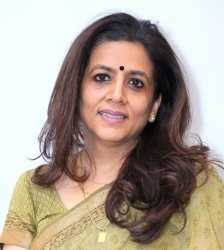 Anisha Singh
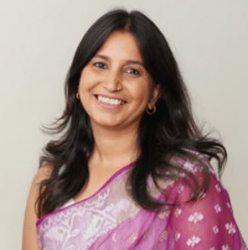 Pooja Sehgal
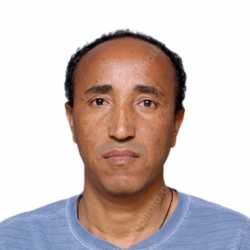 Betemariam Alemu
 Bayissa Urgesa Gurmu
 Zeenat Sultana
 Michael Titus
 Samaila Yusuf